
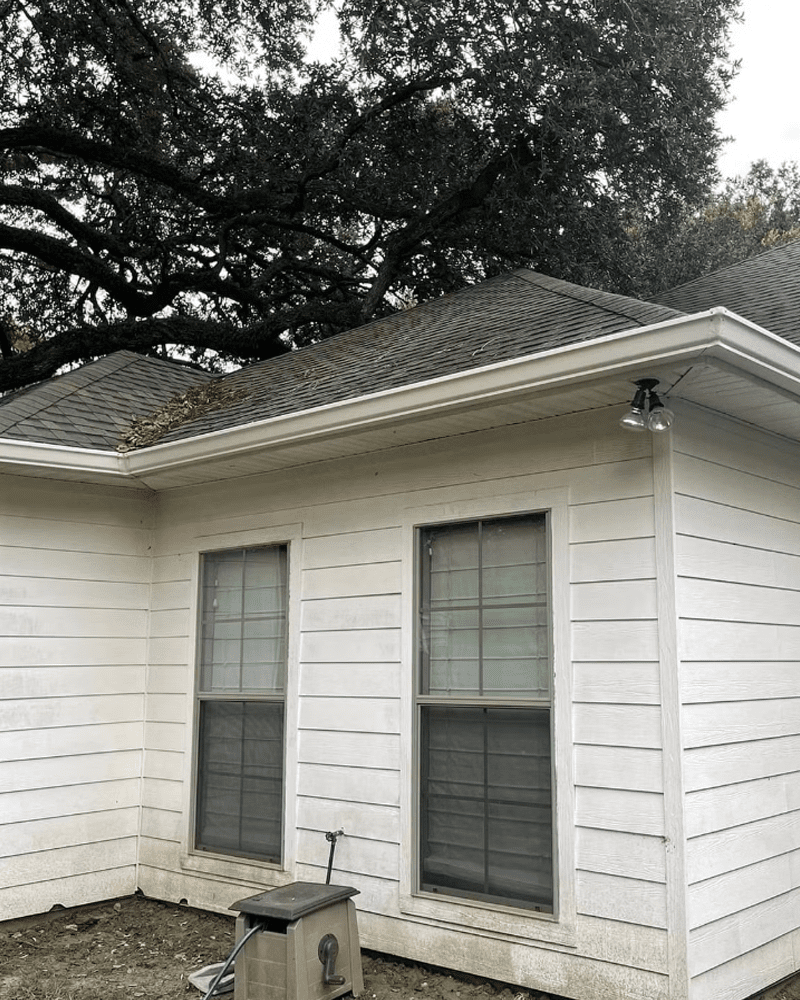
Gutter Replacement: When and Why to Upgrade
Gutters quietly play a vital role in protecting your home by channeling roof runoff safely away from siding, fascia, and the foundation. But like any component, they eventually wear out. Knowing when to repair versus when to replace them—and understanding the benefits of a new system—can save you headaches, prevent damage, and improve long-term performance.
1. Typical Gutter Lifespan & What Affects It
- The lifespan of gutters varies by material:
- Vinyl gutters often last 10–15 years under typical conditions.
- Aluminum and galvanized steel gutters can last 20–40 years, depending on maintenance, climate, and quality.
- Premium materials like copper may last even longer, though cost is also higher.
- Key external factors that shorten gutter life:
- Harsh weather (freeze-thaw cycles, heavy storms)
- Accumulation of debris, which increases stress on the gutters
- Poor maintenance (e.g. never cleaning, not repairing small damage)
- Structural shifts or settling of the home
- Because of these variables, many professionals use “around 20 years” as a rough benchmark for replacement under normal usage.
2. Warning Signs & Red Flags That You Need Replacement
Here are important indicators that your gutters may need full replacement rather than patch repairs:
| Warning Sign | What It Indicates | Why Replacement May Be Better Than Repair |
|---|---|---|
| Cracks, holes, or perforations | The material is deteriorating or has been damaged | Patches may fail over time; replacing restores full structural integrity |
| Rust or corrosion (on metal systems) | Material is weakening | Rust often spreads; replacement gives you a fresh start with corrosion-resistant options |
| Sagging, bending, or pulling away | Fasteners or fascia are failing | Sagged gutters lose proper slope and may detach during water load |
| Constant overflow or clogging | The gutter may be undersized, warped, or unable to move debris | Frequent cleaning becomes impractical; a new, better-sized system helps prevent overflow |
| Damage to fascia, soffits, or roof edges | Water leakage is already causing secondary damage | A new gutter with proper flashing helps avoid further structural damage |
| Pooling water at foundation or basement leaks | Drainage is failing, and water is infiltrating lower levels | Replacing with proper downspouts and drainage helps protect the foundation |
| Seams splitting or leaking (in sectional gutters) | The joints are aging or failing | Switching to a seamless design may reduce future leak points |
| Fading, peeling paint, or stains beneath gutters | The gutters are causing water to drip or run off improperly | Replacement ensures water is channeled correctly away from siding and trim |
If you see multiple of these signs, replacement is often more cost-effective and safer long-term than repeated patching.
3. Benefits of Upgrading Your Gutters
Upgrading your gutters offers several advantages over sticking with an aging, compromised system:
- Improved performance & drainage
New gutters installed with proper pitch, sizing, and modern materials divert water more efficiently. - Fewer leaks & maintenance
Newer designs—especially seamless systems—offer fewer joints and weak spots. - Better durability & longevity
Using modern materials, thicker gauges, and better fasteners extends the useful life. - Prevention of collateral damage
A reliable gutter system protects your siding, foundation, landscaping, and interior from water intrusion. - Aesthetic & curb appeal
Clean, well-fitted gutters enhance the look of the house versus old, sagging, rusted gutters. - Opportunity for improvements
Replacing gives you a chance to select upgrades like gutter guards, larger downspouts, or copper accents.
4. Planning & Replacing Gutters: What the Process Looks Like
Here’s a step-by-step outline of the replacement process:
- Inspection & Planning
- Contractor inspects existing gutters, fascia, roof edges, slope, and drainage paths.
- Evaluate whether underlying components (fascia boards, soffits) need repair.
- Decide on material, color, style (e.g. K-style, half-round, box gutters).
- Material Selection & Sizing
- Choose durable material (aluminum, copper, steel, etc.).
- Select proper dimensions (5″, 6″, oversized) and downspout volume.
- Consider gutter guards or screens if desired.
- Removal of Old Gutters
- Carefully detach old gutters, removing hangers, clips, and fasteners.
- Inspect and repair or replace damaged fascia, soffits, or trim.
- Installation of New Gutters
- Install new mounting hardware and brackets.
- Ensure consistent slope toward downspouts (typically around ¼” drop per 10 ft, depending on code/standard).
- Fit gutters, joiners, corners, end caps, and downspouts.
- Seal joints and transition points using appropriate sealant or flashing.
- Testing & Cleanup
- Run water through the new system to check for leaks and proper flow.
- Make minor adjustments if necessary.
- Clean up debris, remove old materials, and leave site tidy.
- Follow-up Inspection & Maintenance Plan
- Periodically inspect for clogs, leaks, and fastener integrity.
- Clean out debris (typically twice a year or more in heavily wooded areas).
Many replacement projects for a typical house can be completed within a day or two, assuming no major structural repairs are needed.
5. Cost Considerations & Budgeting
When planning gutter replacement, budget for:
- Material costs — Aluminum, steel, copper, etc., vary widely
- Labor and installation — Skilled work, roof access, custom fitting
- Removal and disposal of old gutters
- Additional repairs — Fascia, soffits, roof edge, flashing
- Upgrades / extras — Gutter guards, splash blocks, decorative accents
Because cost depends heavily on home size, roof complexity, and material choices, always get multiple estimates and check that each covers full scope (materials, labor, warranty).
Summary
Gutters are essential for managing water around your home, but even the best systems eventually wear out. Watching for signs like sagging, leaks, rust, or pooling water can help you know when to replace instead of patch. Upgrading to a new system gives you a fresh start—with improved performance, less maintenance, and better protection for your structure. When done properly, gutter replacement is an investment in your home’s durability, safety, and curb appeal.

Leave a Reply
Want to join the discussion?Feel free to contribute!